
In fact, an ancient story has it that the gods delight in this business, both as followers and spectators of the chase. —Xenophon, Cynegetica
The fox is a trap; when the right moment comes the dead creature becomes more alive than the living. But the skill of the fox lies in its ability to lie low, crouching in the shadows. This is how the author of the Treatise on Hunting sees it: ‘The most scheming (aiolóboulos) of wild animals…it lives, in its intelligence, in the depths of an earth which is admirably laid out. The dwelling that it digs itself has seven different entrances linked by as many corridors and the openings are situated a long way from each other. Thus it has less cause to fear that hunters, laying a trap at its door, will make it fall into their snares’. It is within this lair that it devises its plots. The misleading, enigmatic, polymorphic earth of the fox is matched by the animal’s equally impenetrable mind.
—Detienne and Vernant, “The Ploys of Cunning”, Cunning Intelligence in Greek Culture and Society
Nagel’s… question, “Can there be really be something which gives point to everything else by encompassing it, but which couldn’t have, or need, any point itself?” is ambiguous. As shown above, it is incoherent to say or assume that the ultimate point within a theoretical framework T requires or is subject to explanation outside of the accepted or presupposed theoretical framework T.
—Puntel, Structure and Being 467 (“The World as a Whole”, 4.5.3.4.2)
Are not supratemporality and omnitemporality also the characteristics of Time itself? Are they not characteristics of the Living Present, which is the absolute concrete Form of phenomenological temporality and the primordial Absolute of all transcendental life? …Traditionality is what circulates from one to the other [logos and telos], illuminating one by the other in a movement wherein consciousness discovers its path in an indefinite reduction, always already begun, and wherein every adventure is a change of direction [conversion] and every return to the origin an audacious move towards the horizon.
—Jacques Derrida, Introduction to the Origin of Geometry XI
I.
In a trilogy of dialogues (Thaetaetus, Sophist and Statesman, the latter two featuring the enigmatic Eleatic Stranger) Plato makes evocative use of the method of division to “hunt” the Sophist and the Statesman; that is, to seek an agreeable shared definition for them. In the method of division this is done by way of a series of more and more subtle divisions of the field of human endeavor; upon reaching the terminus, the sequence of cuts is then collected together into a definition. (For instance: among all arts, the angler is one who acquires rather than produces; among acquisitive arts, he captures rather than exchanges; among capturers, he fishes rather than hunts; and among fishers, he fishes with a hook rather than a net.) Despite several suggestions for a portrait of the philosopher to be drawn up by a similar division, Plato leaves this undone, as though offering an exercise to his readers. Just like a philosophical image, we are perhaps invited to complete the syllogism ourselves, to move from passive formal definition to real determinate action — to compose the likeness. Yet right away we run into trouble, the philosopher is “hard to see clearly” (Sophist 254); discerning her form directly is blocked because “the philosopher uses reason to stay near the form, being. She isn’t at all easy to see because that area is so bright and the eyes of most people’s souls can’t bear to look at what’s divine” (Sophist 254b). The philosopher is thus at least as difficult a quarry as the sophist, who is hard to discern for an opposite reason. The sophist is so difficult to distinguish because she dwells in darkness and disappears into the shadows of nonbeing: “The sophist runs off into the darkness of that which is not, which she’s had practice dealing with, and she’s hard to see because the place is so dark. Isn’t that right? —It seems to be” (Sophist 254) The philosopher is even challenged to differentiate herself from the sophist — the final definition of the sophist notably and ironically “represents” Socrates or is indistinguishable from him: the expert in dialectic who proceeds by brief responses, who “uses short speeches to force the person talking with him to contradict himself” (Sophist 268b); “contrary-speech producing, insincere and unknowing sort, of the appearance-making kind of copy-making, and the word-juggling part of production that’s marked off as human and not divine” (Sophist 268d).
Philosophical method aims to capture much more than a name. “Now in this case you and I only have the name in common, and maybe we’ve each used it for a different thing.” (Sophist 218c) We will learn nothing by names alone; we must also divide the field of human endeavor together with care. However we are not yet concerned with recognizing the philosopher. “Anyway we’re not concerned with the people; we’re looking for what’s true.” (Sophist 246d) Philosophy seeks a truth beyond recognition; it’s truly unrecognizable. Now if I mistake Theaetetus for Theodorus, I have simply made a student into a geometer, but if I mistake Gorgias or Thrasymachus for Socrates, I’m lost. “Maybe we’ve found the philosopher even though we were looking for the sophist?” (Sophist 253c)
Read More

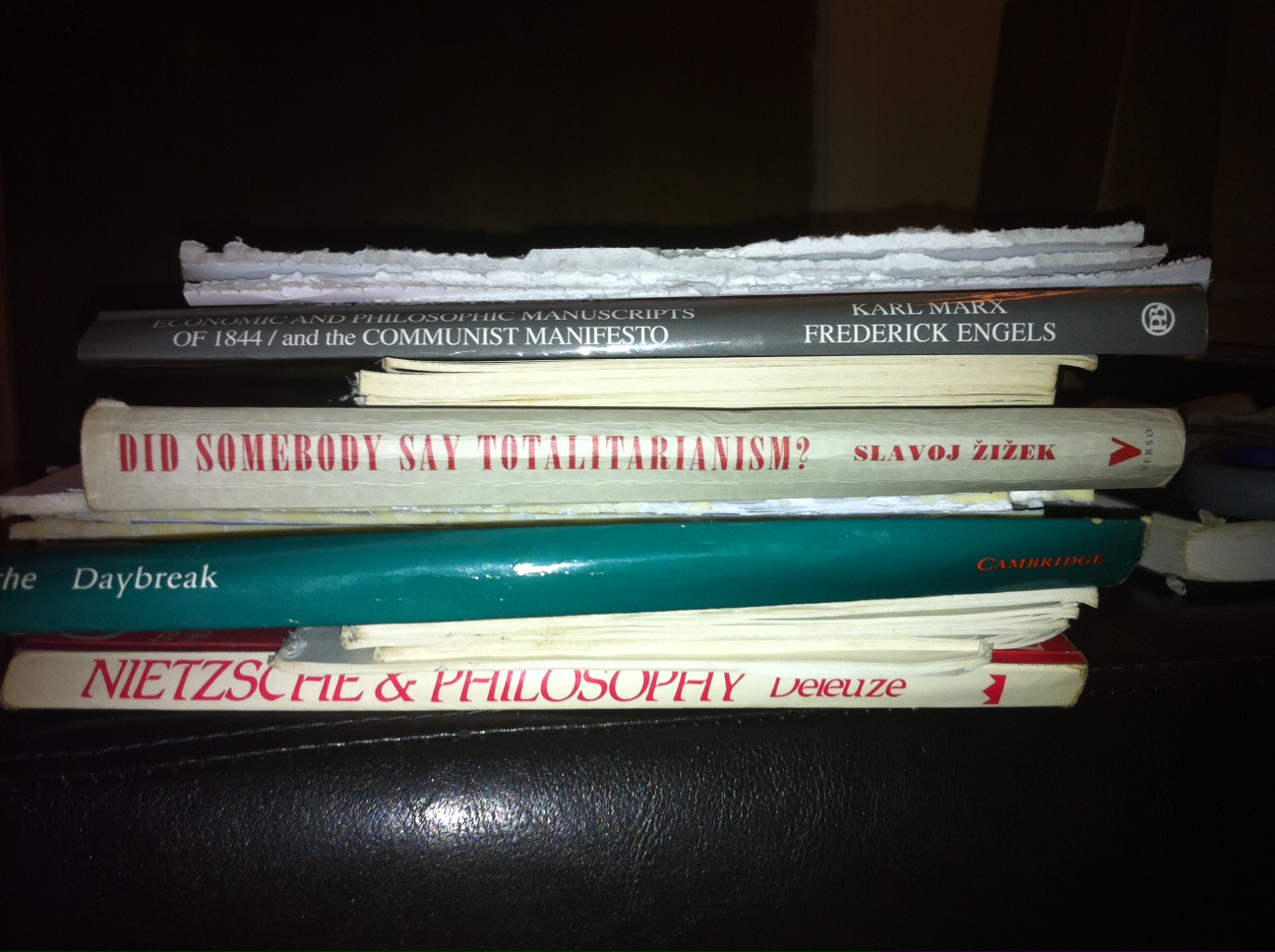
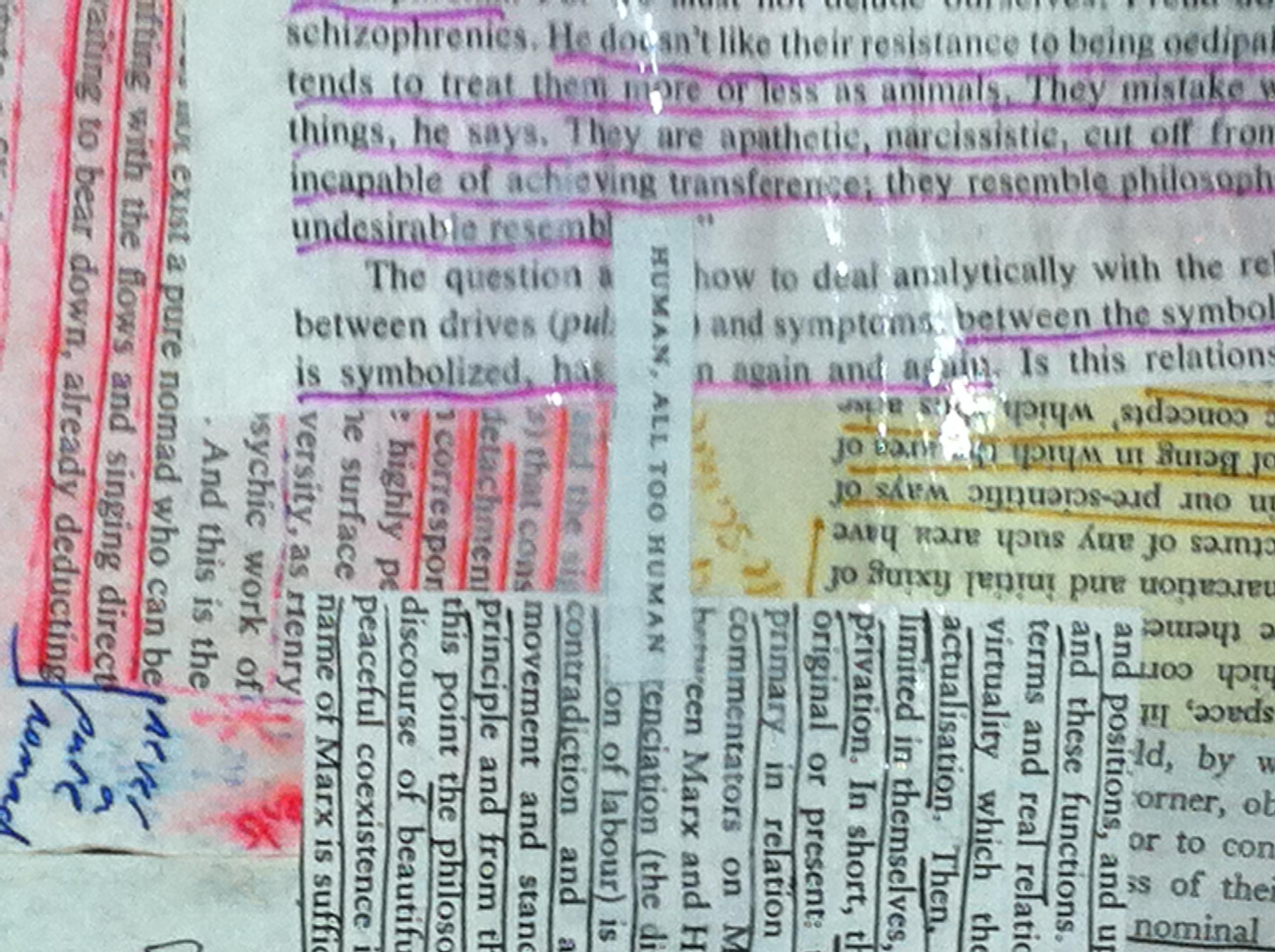 Below, I will include my experimental essay reflecting on this project and the questionnaire I had to fill out for the project. Here is the questionnaire: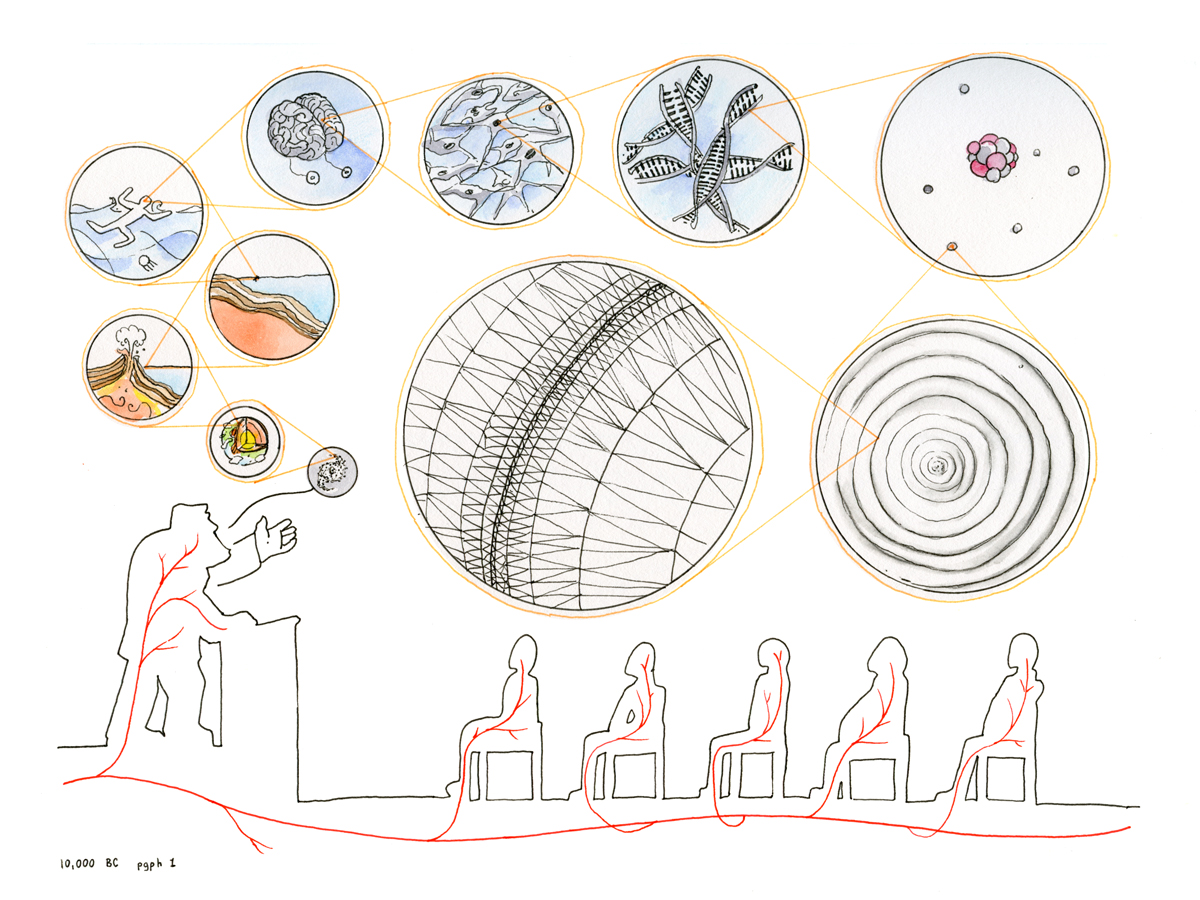


 Fractal Ontology